
5 May 1994
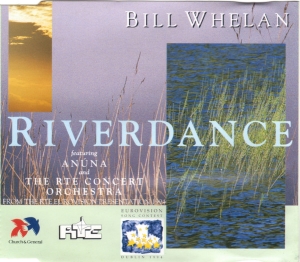
It was a dreadful song anyway: insipid, retrograde AOR balladry about being old people. How it won can only be explained as a whole continent really, really wanting to come back to Ireland on another expenses-paid jolly same time next year. (The UK entry that year, ‘Lonely Symphony’ sung by Frances Ruffelle, was an R&B-pop slow burner that was far better but finished a harsh tenth.) Still, imagine winning the Eurovision, to seal a historic hat-trick, and getting upstaged not only by the interval dance act but also by the musical accompaniment to the interval dance act. ‘Rock ‘N’ Roll Kids’ was the first Irish Eurovision winner not to go to number one in Ireland: held off at number two behind that year’s real Eurovision winner.
We know now that Riverdance became a global cultural phenomenon and record-breaking stage show, even for people who didn’t have an ancestor leave Ireland by coffin ship or prison ship. What mystifies me even more than how a patently awful middle-aged ballad won Eurovision is how the music of Riverdance became the biggest-selling single and, at 18 weeks, still the longest-reigning number one in Irish chart history. (The first of those accolades was subsequently taken by a ’90s English cultural event of an entirely different order.) Remember, this is just the music, without the dancing.
I have a theory. I think the Riverdance single sold so much and stayed at number one so long because in the summer of 1994 it was bought by tourists to Ireland as an Irish souvenir. An estimated 300 million people saw that none-more-Irish Eurovision interval performance: you can’t buy that amount of exposure or cultural clout. Meanwhile, the UK chart was similarly dominated by Wet Wet Wet’s truly sickening ‘Love Is All Around’, from the Brit-flick Four Weddings And A Funeral: I wonder if, along with magnanimous movie marketing, a whole summer’s worth of tourists to London bought it as an English souvenir and kept it on the UK top spot and UK airwaves for three months, as if an English summer isn’t miserable enough. Basically, tourists were trolling our singles charts.
So, minus the dancing, is ‘Riverdance’ the record (in the video below) just a musical tea-towel from Carroll’s Irish Gifts or does it have its own merits? As an almost-six-minute track in a classical four-movement structure, it’s certainly ambitious. The first movement is firmly and cannily in Enya territory: a lone soprano intones vaguely mystical lyrics, accompanied by Anúna’s echoing choral vocals over misty synths. Then it flips to a jaunty trad Irish pub seisiún led by fiddle and bodhrán. Next, we get the pounding foot-soldiers of mass percussion, backed by the symphonic sweep of the RTÉ Concert Orchestra. The final movement is an uileann pipe melody urgently and naggingly pushing to a climactic crescendo. None of these four movements interest me and I don’t hear them as a whole; it’s just four bland pieces stitched together for a chorale of singers and a troupe of dancers as their backing music. So, maybe not so much a souvenir tea-towel as souvenir wallpaper.
‘Riverdance’ as chart-topping record is part of a noticeable trend of the ’90s charts so far: how the number one single shifts from being a signifier of pop music to one of pop culture, be it movie theme, football squad anthem, ad soundtrack, and now tourist-friendly souvenir. This remedies itself by the end of the decade, ahead of a new golden age of pop music in the ’00s. At this point in the ’90s, though, you’d be forgiven for thinking we never seem to rock and roll any more.