
18 January 1965
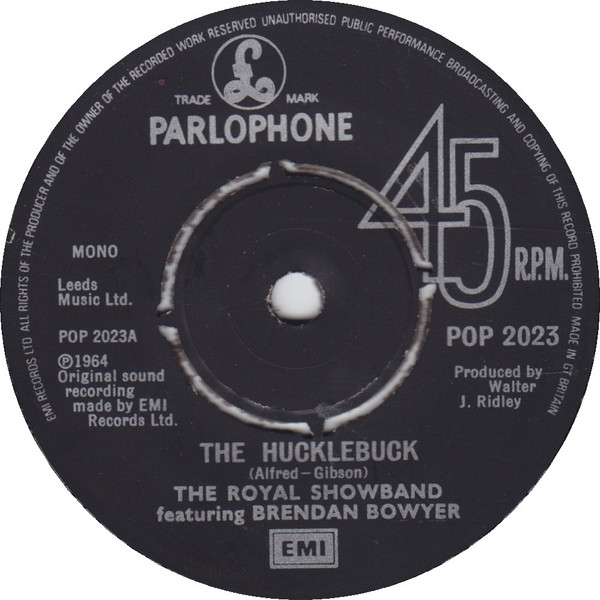
‘The Hucklebuck’ is the ‘Maniac 2000’ of ’60s Ireland and the most famous record of the Irish showband era. That said, tempting as it is to suggest such a rare flash of native dancefloor-filling buzz caught some ’60s mood of social change or economic prosperity, this is still the Ireland of mass emigration, the marriage bar, Magdalene Laundries, industrial schools, and many other punitive socio-religious conventions. Of course, Ireland may well have been swinging in 1965 if you were an employed, settled, straight, able-bodied white Catholic man – the entire population of Official Ireland, aside from housewives and nuns.
Given all the milquetoast Elvis and maudlin Jim Reeves of most showband chart-toppers, you can understand how the genuine energy and effervescence of ‘The Hucklebuck’ caused a sensation. Bowyer comes out bucking and kinetic like a champion boxer, and the band fizz along at a galloping pace. However, even in 1965 this was a record out of time. After all, it’s a ’40s big-band line-up playing a 1949 US hit in ’50s US mainstream rock ‘n roll style. Also, the dreadful sax solo—effectively a slow crib of ‘Yakety Sax’, later to become the signature music for Benny Hill—kills all the momentum and reasserts the timid smallness of the showband idiom. Let’s remember that the showbands were a function of Ireland’s social and cultural backwardness. Okay, no mere pop record could bring down Ireland’s conservative, theocratic paradigm, and we’ll still have Papal merch at number one in 1980. Showbands continue to score Irish number one hits well into the ’70s. But ‘The Hucklebuck’ is the peak of their pop-cultural supremacy. 1965 will shortly bring us a genuine change of direction and outlook for Irish pop music – if not stylistically, then certainly geographically.