
22 April 1972
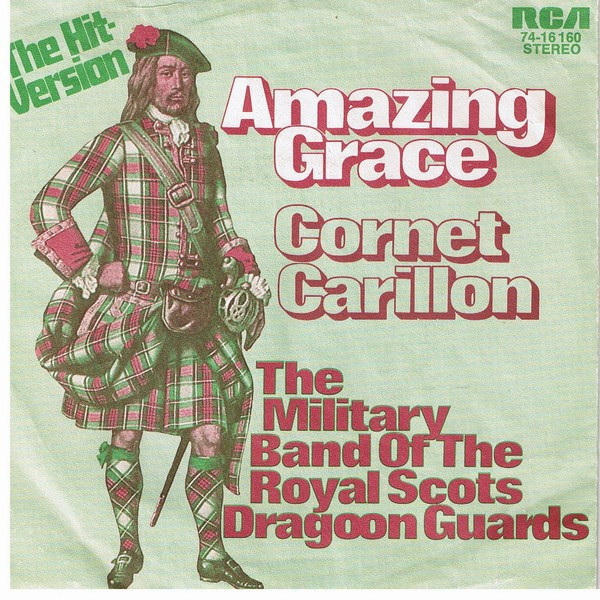
On 30 January 1972—Bloody Sunday—British soldiers killed 13 unarmed civilians at a protest march in the nationalist Bogside area of Derry. The immediate response in Ireland included the burning of the British Embassy in Dublin. Three months later, the British Army were at number one in the Irish singles charts.
There’s more. The British Army regiment in question were the Royal Scots Dragoon Guards, who in 1972 were posted in Northern Ireland. The track “dropped” by their combined musical outfits in April 1972, and which also went to number one in the UK, was an instrumental version of ‘Amazing Grace’, that Christian hymn popularised in the ’60s by US civil rights and anti-war marches. That solitary chart-topper here means that, astonishingly, the British Army has had more number one singles in Ireland than The Cranberries or The Corrs or Aslan or Rory Gallagher or Van Morrison, and the same amount as Sinéad O’Connor and Christy Moore.
Trivial as a number one record in the pop charts is, especially in such horrific circumstances, and aside from the regular tendency of appalling schmaltz to bob up to number one, what’s going on here? Perhaps the antiquated Scottish name, along with the tartancore get-up of my man on the single sleeve (above), distanced this in the Irish popular consciousness from the reality of events just up the road. Another possibility is that their dreary bagpipe rendition of the hymnal ‘Amazing Grace’ provided Irish people with sentimental escapism from troubling “world” affairs such as British soldiers killing 13 civilians at a protest march in Derry. Then there’s the legacy of cultural colonialism, the dominance of the neighbouring UK pop cultural scene on the Irish marketplace, and West Brits. Or maybe this tells us that, regardless of their personal allegiance, already in 1972 there was as little thought for the people of Northern Ireland in the 26 Irish counties to their south as in the three UK nations to their east. I don’t know. None of this makes sense. You tell me.