
20 March 1971
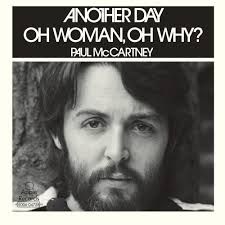
Surprisingly, Paul McCartney won’t have a post-Beatles UK number one single until ‘Mull Of Kintyre’ in 1977 – and that’s his only UK chart-topping single of the entire ’70s. It’s surprising not only because he was a Beatle and was still having loads of hits, but also because Paul’s sentimental, whimsical old-fashioned family-piano singalongs from Sgt Pepper onwards—’When I’m Sixty-Four’, ‘Your Mother Should Know’, ‘Martha My Dear’, ‘Honey Pie’, ‘Ob-La-Di, Ob-La-Da’ and the like—were the template for a a decade of bubblegum-pop supremacy in the UK. In particular, we’ll see Ireland’s biggest pop star of the ’70s top the charts with McCartney-ish songs twice in the UK and even once in America.
Here in Ireland, although George gets in before him with ‘My Sweet Lord’, Paul will have four chart-topping singles during the ’70s. This first one is from his mostly-acoustic-guitar early-solo phase, so at least it’s a breezier listen than the soft rock of Wings. However, with lyrics about the drab life of a lonely woman, comparing ‘Another Day’ with ‘Eleanor Rigby’ is unavoidable – and telling. ‘Eleanor Rigby’ is concise and focused; ‘Another Day’ is padded and plastered with naff flourishes and whimsical doo-doo-doos. ‘Eleanor Rigby’ is engaged and empathetic; ‘Another Day’ is trite and self-satisfied. I struggled to get to the end of it. As with many of McCartney’s egregious solo hits, the fact that it’s a memorable tune only serves to stick it in my head and irritate me more.
This is no reflection on his new writing partner, an L. McCartney. We know from his so-called “granny music” listed above that Paul had a weakness for ditties and whimsy, and ‘Live And Let Die’ aside the ’70s are when he commits to schmaltz. Imagine if he had used his stellar melodic powers for good instead of ill: more ‘Rigby’ rigour and less Bland On The Runs. By the way, I may end up saying something similar about that Irish acolyte of his too.
And what do you know: almost as if he had reached forward from 1971 and heard me, Paul’s next number one in Ireland will be unbelievably different. That’s not necessarily a good thing, though.