
21 December 1972
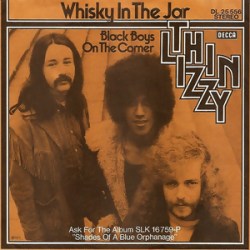
Like an acid-tripping episode of Nationwide, our number ones of 1972 begin in the peaceful céilí-showband Slaney Valley, then head north to catch up with community goings-on Foyleside and a music-loving British Army regiment who’ve made the area their home, and now end here with an action-packed visit to the scenic Celtic-rock uplands of Kerry, Ireland’s favourite county. The standard lyrics of ‘Whiskey In The Jar’, popularised by The Dubliners, tell of “the far-famed Kerry mountains” but this version changes “far-famed” to something strangely inaudible: “the [something] Kerry mountains”. I’ve listened carefully a few times and the recording is simply inconclusive. Thankfully, this doesn’t mar Ireland’s first chart-topping encomium to the universally-beloved Kingdom.
‘Whiskey In The Jar’ stands with ‘Green, Green Grass Of Home’, ‘Bohemian Rhapsody’ (twice!) and ‘Stan’ as part of an Irish chart tradition: a Christmas number one with a body count. It also shares with ‘Fairytale Of New York’ another of our favourite festive themes: a narrator locked up in a cell. I’m happy to report that no one has died in a Christmas number one in Ireland since ‘Stan’ in 2000. Still, even if you didn’t form your worldview in 1972 only from the songs at the top of Ireland’s singles chart, the romanticised tale of a swashbuckling Irish outlaw robbing and then shooting a British Army officer had by the end of that year a likely appeal.
Another part of the appeal of ‘Whiskey In The Jar’, of course, is that it’s an uproariously enjoyable record. It helped create a credible—and actually cool—version of the Celtic rock sound. Coincidentally, this same month of December 1972 also saw the release of debut album Happy To Meet, Sorry To Part by Horslips, the Celtic-glam Fir Bolg who slew the showbands, brought the rambunctious thrill of modern live rock to staid provincial Irish venues, and bequeathed unto Ireland one of our most treasured guitar riffs. ‘Whiskey In The Jar’ has similarly become a national treasure, and its two most instantly-recognisable guitar parts—the clarion-call intro and the swaggering main riff—are just as iconic as that one from Horslips’s 1973 ‘Dearg Doom’: at once traditional and modern, without having to sound contrived, antiquated or stage-Irish.
‘Whiskey In The Jar’ also launches a new Irish rock star – perhaps the best Irish rock star ever, in that no other Irish person has ever been as good at being a rock star as Phil Lynott. His cheeky charisma is yet another huge part of this track’s appeal; we can well picture Philo as a gallivanting highwayman sticking it to boo-hiss Captain Farrell before calling in on Molly in her chamber. Phil Lynott is also important as a pioneering Black Irish person in the public eye; again, the potent mix of tradition and modernity in ‘Whiskey In The Jar’ is a genuine leap forward for Irish cultural life. We’ve not always maintained this rate of social progress, and racism in Ireland against Irish persons of colour has never gone away. ‘Whiskey In The Jar’ can at least remind us that Black Irish people were around long before many of today’s Irish racists were born – while still bearing in mind that Ireland’s love of Philo or other Black Irish stars like Paul McGrath, Samantha Mumba and Jazzy doesn’t sweep away or cancel out the continuing everyday reality of racism in Ireland.
So, the arrival of Phil Lynott, Thin Lizzy and ‘Whiskey In The Jar’ completes our trip through 1972, the most remarkable year in the history of Ireland’s number one singles. We’ll see Philo and Lizzy here again in around four chart-years from now. In the meantime, 1973 will continue with glam, bubblegum, cabaret, country & Irish, and nationalism. We won’t have any further chart-toppers from the British Army; instead we’ll get two Osmonds. Somehow I suspect I’ll soon be nostalgic for 1972.