
28 June 1973
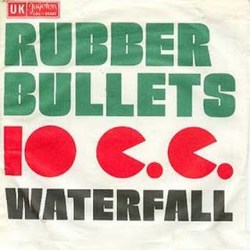
Rubber bullets were developed by the British Ministry of Defence, and their first use was by the British Army in Northern Ireland. Ostensibly non-fatal rounds for dealing with riots and public disorder by being fired at the ground in front of people’s legs, rubber bullets soon proved to be responsible for deaths and blindings. The CAIN Archive in Ulster University estimates 55,000 rubber bullets were fired in Northern Ireland between 1970 and 1975. Belfast woman Emma Groves was blinded in November 1971 by a rubber bullet shot by a soldier through the window of her home. Eleven-year-old Francis Rowntree in the Divis Flats in Belfast was killed by a rubber bullet in April 1972. Six weeks after 21-year-old Thomas Friel died after being hit by a rubber bullet in Creggan in Derry in May 1973, the number one single in Ireland and the UK was 10cc’s ‘Rubber Bullets’.
I’d love to say ‘Rubber Bullets’ was some sort of protest song about those controversial projectiles in particular or the Troubles in general. But no, it’s a bubblegum rock n’ roll ditty set at a dance in a US county jail with the National Guard, Uncle Sam, American accents and what have you. Perhaps events in Belfast and Derry hadn’t yet filtered through to 10cc HQ in Stockport to make them consider their song title. You’d have to imagine at least some of the record-buying public in Ireland and Britain had seen a news item on the Troubles. However, given that the previous year a British Army regiment stationed in Northern Ireland had topped the Irish and UK charts a mere twelve weeks after Bloody Sunday, it’s more likely a whimsical single called ‘Rubber Bullets’ was released and went to number one during the catastrophic use of rubber bullets in the Troubles because people had remarkably poor taste and simply didn’t care.

Discover more from Irish Number Ones
Subscribe to get the latest posts sent to your email.

